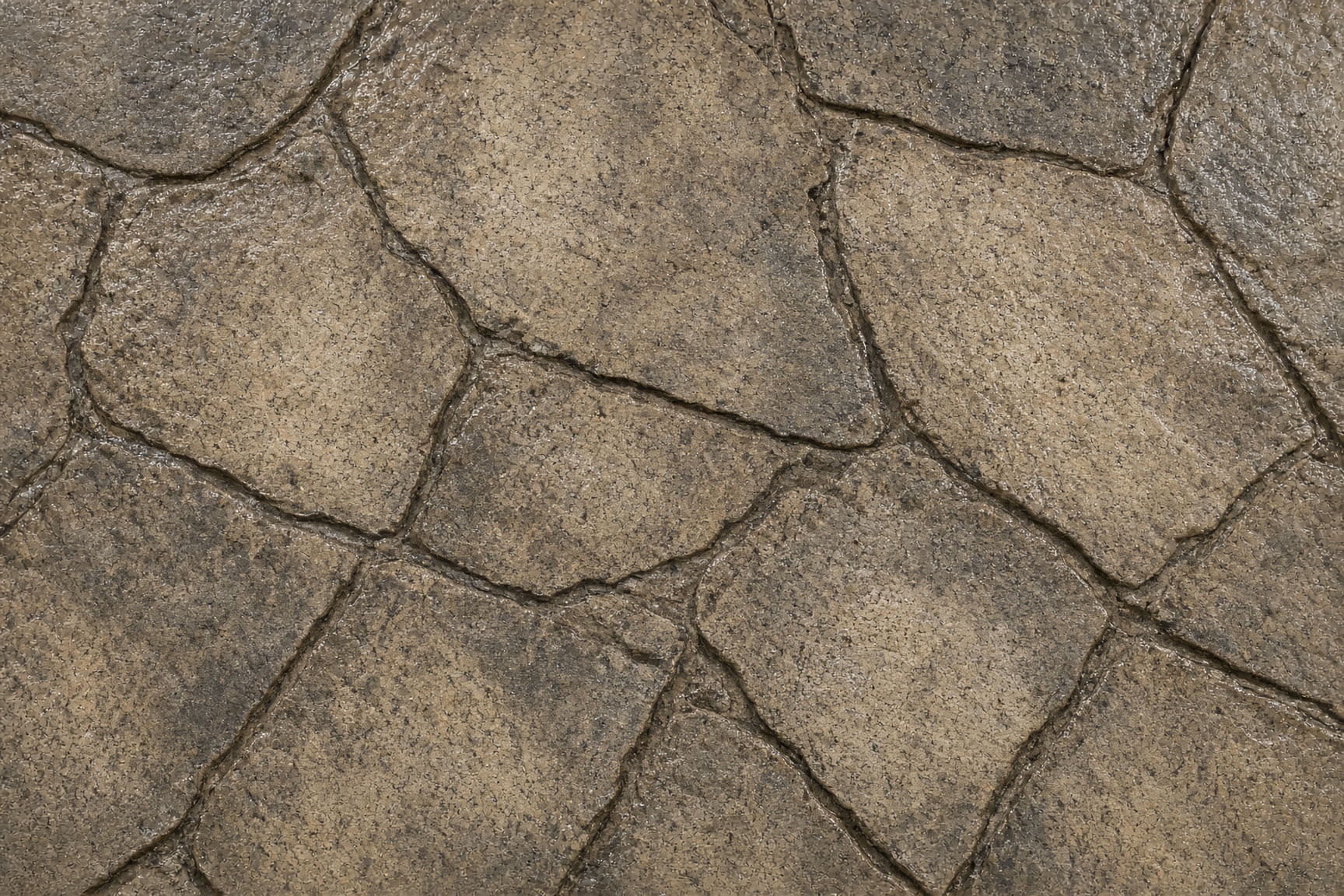
A limestone house in Boerne does not want a warehouse-gray slab. It also does not want a busy stamp that fights the stone. The two decorative paths we pour most are stamped concrete (texture plus color) and stained or dyed concrete (color on a smoother slab). Both need a sealer in this UV. Neither one replaces a proper base.
When stamped is the right call
Choose stamp when you want the surface to read as flagstone, slate, brick, or cobble from the first glance. Large-format flagstone and ashlar sit quietly next to real Hill Country limestone. Brick running-bond is a natural fit in New Braunfels. Stamp is a one-day (sometimes two-day) process on fresh concrete — you cannot stamp a slab that has already set. If you already have a sound gray patio and want color only, stain is the path.
When stain or dye is enough
Acid stain gives variegated terracotta, amber, and espresso. Dye can hit a tighter color if you are matching a stucco or metal roof. Stain does not hide bad finishing or structural cracks. It is the right spend when the slab is already good and you want it darker, richer, and sealed — not when you are trying to disguise a failing patio.
Broom is still a finish, not a consolation prize
A well-tooled broom driveway with honest joints will outlast a poorly based stamped slab every time. We pour a lot of broom work on drives and sidewalks, then stamp or stain the patio and front walk. Mixed finishes on one property look intentional when the color family is the same.
Sealer is part of the decision
Decorative concrete in San Antonio sun needs a sealer and a reseal cycle. Satin is what we spec most; wet-look is dramatic and can be slick. If you do not want any maintenance conversation, stay with unsealed broom and accept the lighter gray. We would rather have that talk now than after a summer of chalking color.