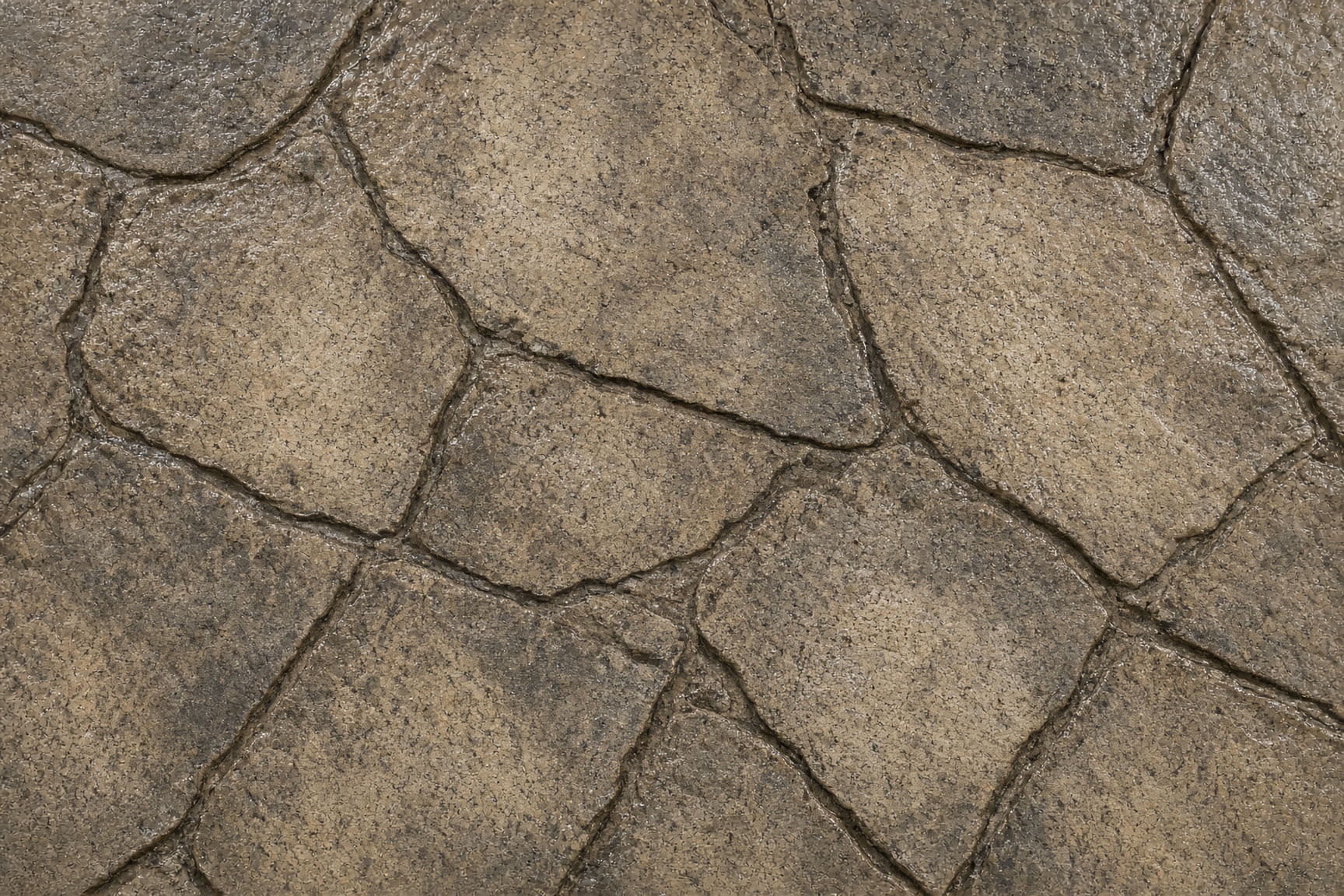
- Flagstone, slate, cobble, ashlar, and brick patterns
- Integral color, release, and antiquing
- Borders and soldier courses
- Satin or wet-look sealer
- Patios, drives, pool surrounds, and walks
Patterns that belong on Texas houses
Large-format flagstone and ashlar are the patterns we pour most around Boerne, Bulverde, and the north side of San Antonio — they sit next to real limestone without competing. Brick running-bond and cobble show up more in New Braunfels and older central neighborhoods. We will not stamp a busy texture on a small patio just because the catalog has it.
Color is a system, not a paint
We use integral color in the mix, a release powder for the highlights, and optional antique highlights after the stamp. That is what makes grout lines recede and the field look like stone. A single dump of color on gray concrete is how you get the orange-peel look people regret. Sealer is part of the system. Decorative work that is not sealed will fade and get dusty in our UV.
Where stamped concrete is the better spend
Stamped concrete costs less than natural flagstone set in mortar, installs faster, and does not have the weed joints of dry-laid stone. It is still a concrete slab — it needs the same base, steel, and control joints as a broom patio. We do not skip those because the surface is pretty.